There is a distinct thrill that comes with slowing down in the field. When you step into the rich, damp environments of Sarawak’s national parks—whether trekking through the rugged terrains of Gunung Santubong or exploring the lush forest floors of Bukit Lambir—the true magic reveals itself only when you stop moving and look closely.
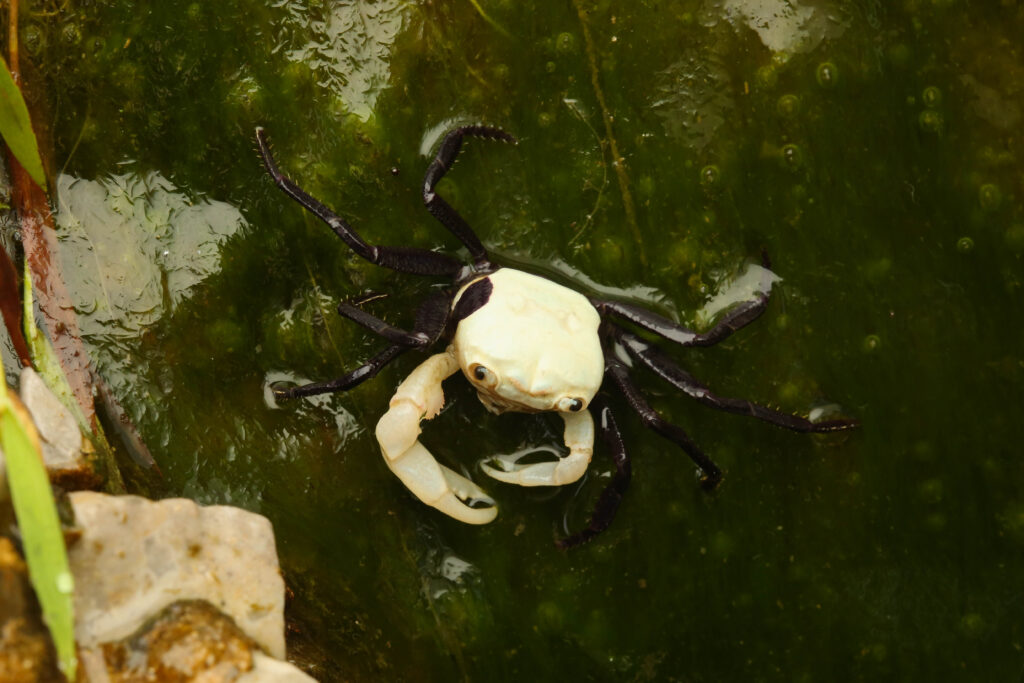
Down in the rocky stream beds and damp undergrowth lies a bustling, microscopic world. On a recent field session, I encountered a striking Sarawak Land Crab (Lepidothelphusa sp.), captured here. Often called the Panda Crab due to its incredible black-and-white contrast, its smooth, cream-white carapace paired with deep, ink-black legs perfectly popped against the textured, algae-dusted river stones.
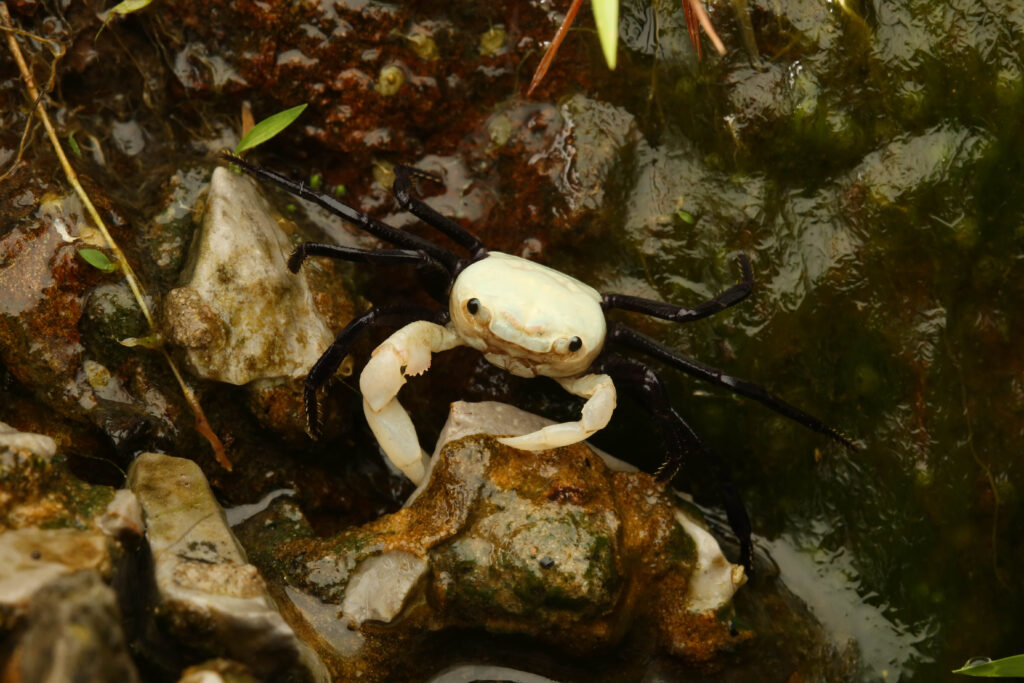
Capturing an active creature in this environment presents a unique set of technical hurdles. Unlike stationary flora or fungi, a forest crab doesn’t sit still for long. To lock in the extreme fine details of its compound eyes and the smooth texture of its claws, precision is everything.
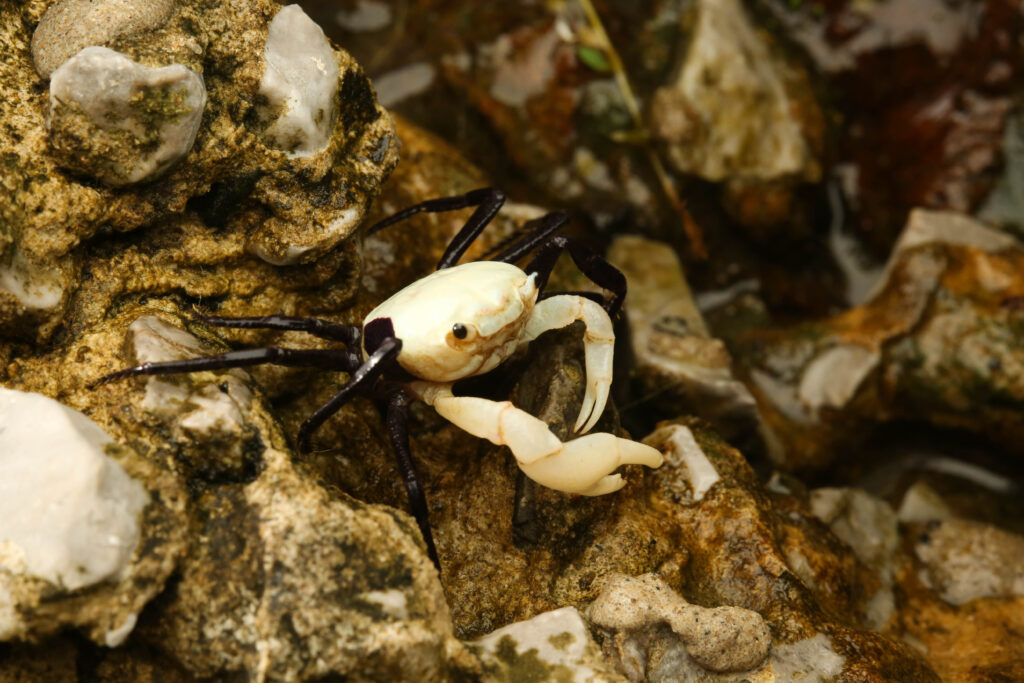
For shots like this, my approach centers on maximizing clarity right at the native 1:1 magnification level. Working down at ground level means dealing with incredibly shallow depth of field. To overcome this, the goal is always a precise, multi-frame focus stack—carefully micro-shifting the focus plane across the subject to ensure that everything from the tip of the front claw to the curve of the carapace is tack-sharp.
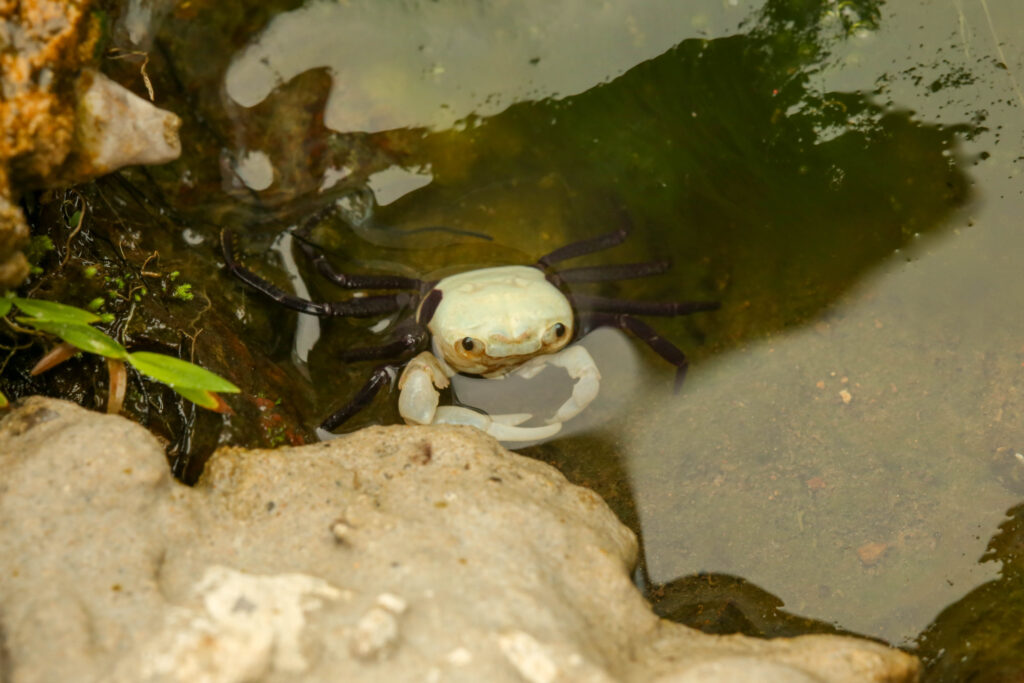
Of course, dealing with the dense canopy shade of Borneo’s forests means light is always at a premium. Relying on harsh, direct flash would completely blow out the pale, reflective surface of a crab like this, obliterating the delicate gradients on its shell. To manage this, I rely heavily on a custom-built flash diffuser. By softening the strobe, the diffuser wraps the light gently around the subject, preserving the natural mood of the wet rocks while bringing out the intense, true-to-life details of the wildlife.
Every frame brought back from the field is a reminder of why macro photography is so rewarding. It forces us to slow down, adjust our perspective, and document the stunning, overlooked biodiversity that thrives right beneath our feet.