Sometimes, the best camera is simply the one in your pocket. While I usually head into the undergrowth loaded down with heavy camera bodies, dedicated macro lenses, and custom diffusers, this recent trip was entirely different. I was out exploring the forest trails, enjoying a relaxed weekend walk with my kids, leaving the heavy gear bag at home.
But nature always has a way of throwing a masterpiece right in your path when you least expect it. Nestled directly on the leaf litter, we stumbled upon one of the most spectacular and surreal fungi structures in the world: a Bridal Veil Stinkhorn (Phallus indusiatus), captured here.
The Best Camera is the One in Your Pocket
Stumbling on a pristine stinkhorn is a rare treat. This fungus is famous for its rapid growth, springing up overnight and deploying a delicate, lacy white indusium—the “bridal veil”—that drapes elegantly from its olive-green cap down to the forest floor. Within a day, the fragile structure will collapse back into the soil, making it a fleeting marvel to witness.
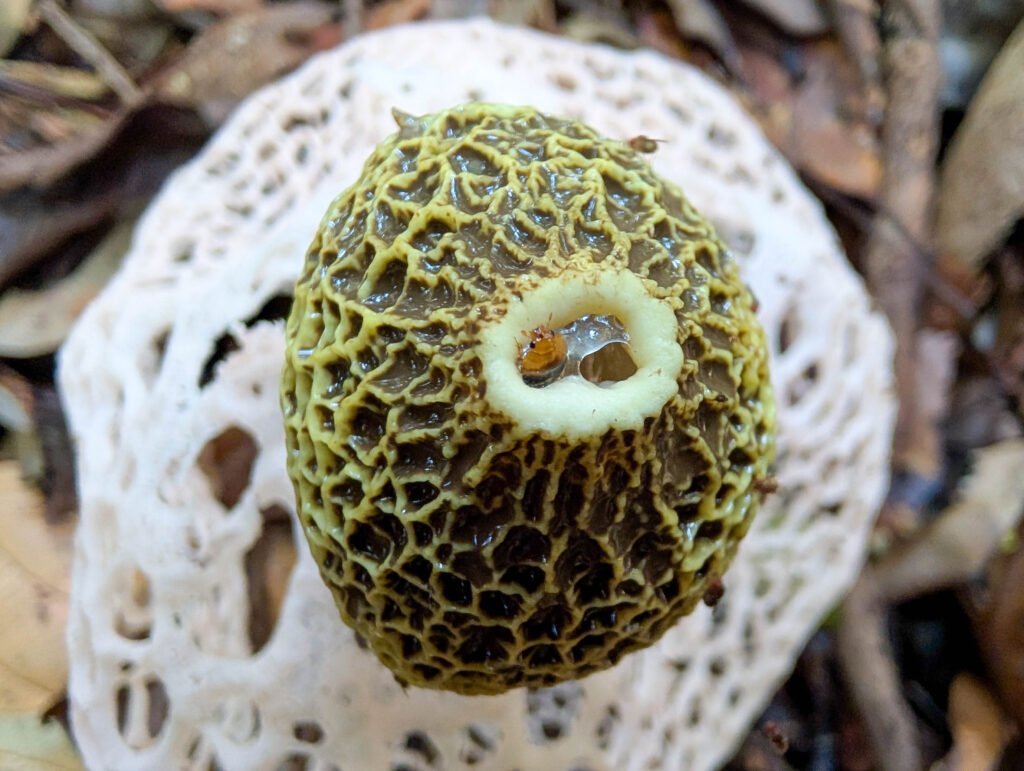
Without my specialized macro rig to rely on, I had to work purely with my phone camera. Smartphone sensors have come a long way, but shooting high-detail natural geometry like this net-like skirt still requires a steady hand. I crouched down to leaf-litter level right alongside the kids, utilizing the phone’s native tap-to-focus feature on the central stalk. By making sure the phone was parallel to the main stem, the lens captured the astonishing honeycomb patterns of the veil beautifully, proving that you don’t always need complex focus-stacking workflows to document a striking biological record.
Working with Natural Forest Canopy Light
Without an external flash and a soft diffuser to manipulate the scene, I had to rely entirely on the natural, ambient light filtering down through the dense jungle canopy. This actually worked to our advantage. The overcast, diffused daylight under the trees cast a soft, even illumination over the forest floor, entirely skipping the harsh, bright hot spots that direct sunlight or raw smartphone flashes can create.
The natural light perfectly handles the exposure of the crisp white lace, while the dark, decaying brown leaves of the backdrop provide an excellent organic contrast. Sharing these small, spontaneous discoveries with the kids reminds me that photography isn’t always about chasing the ultimate technical spec—sometimes it’s about capturing a moment of pure curiosity right when it happens.