If you have ever wanted to look a prehistoric creature right in the face—or rather, right in its tiny, retractable head—you don’t need a time machine. You just need to look carefully at the forest floor during a trek through the rainforest.
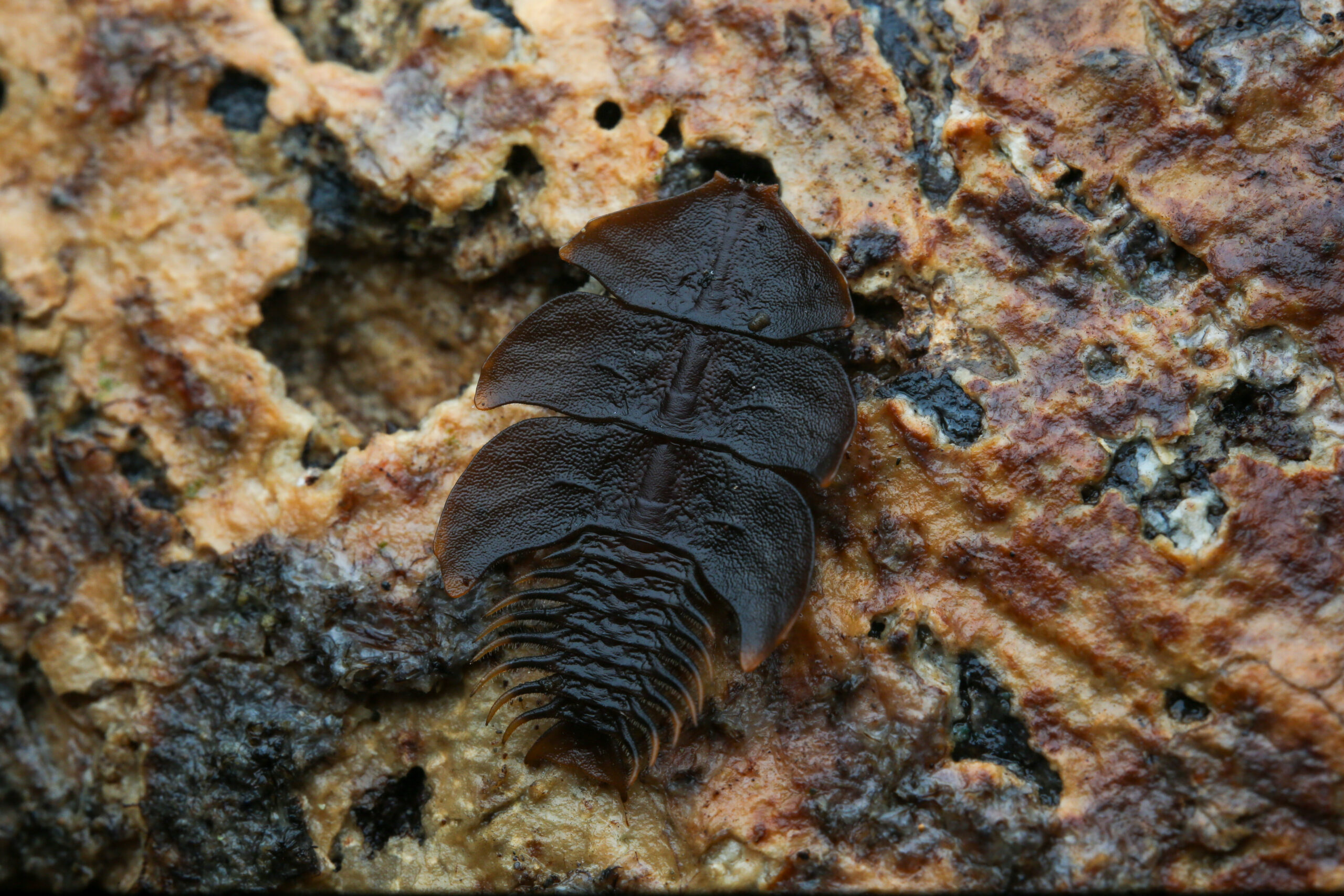
Take a look at this incredible specimen captured on camera. It looks like a cross between a miniature armored dinosaur, an alien spacecraft, and a 250-million-year-old marine fossil.
What Exactly Are We Looking At?
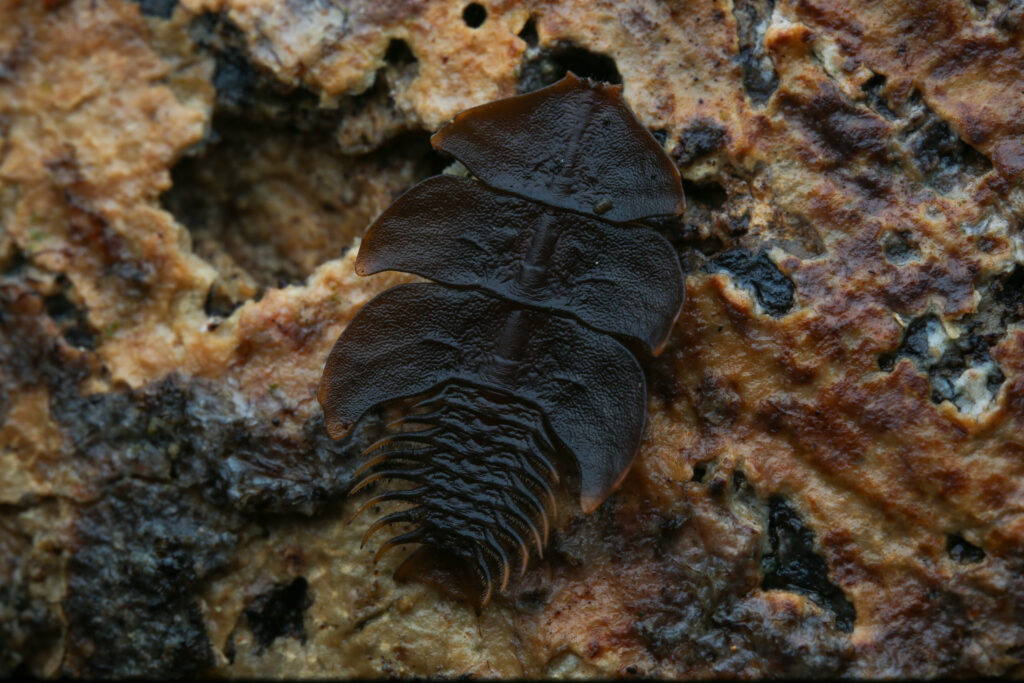
This jaw-dropping creature is commonly known as a Trilobite Beetle. Despite its uncanny resemblance to the famous extinct marine arthropods of the Paleozoic era, it actually evolved tens of millions of years after trilobites completely vanished from the Earth. Talk about a brilliant case of cosmic copy-pasting in evolutionary design!
Here is a quick breakdown of its fascinating anatomy:
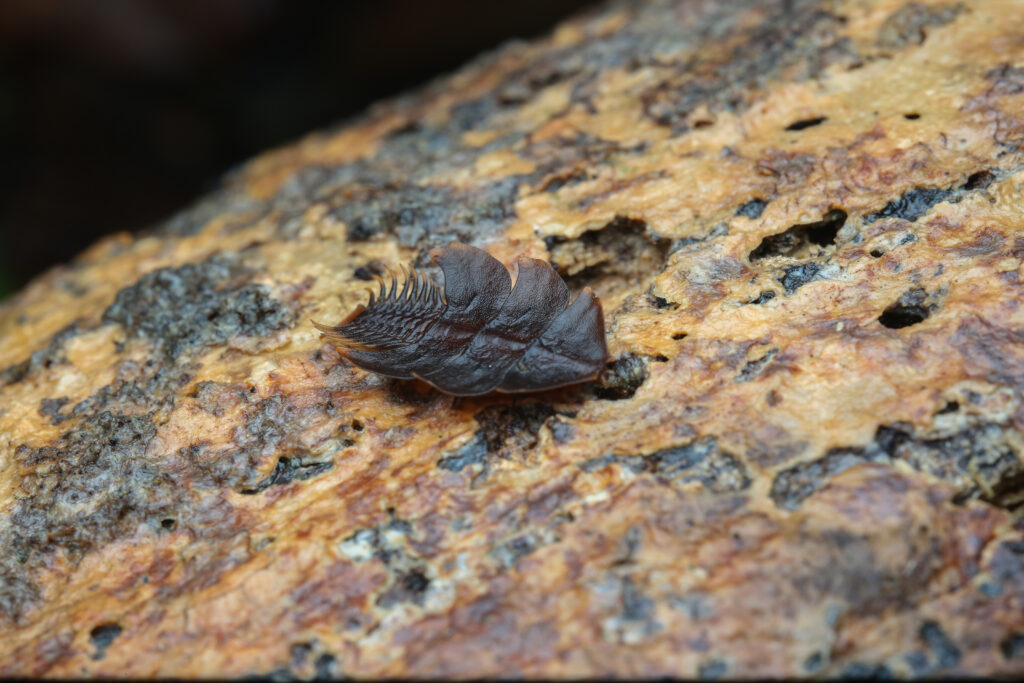
- The Armor: The body is shielded by heavy, rigid, overlapping plate-like segments (called tergites) that give it that iconic prehistoric look.
- The Rear End: Those comb-like, spiked fringes near the tail end add to the creature’s formidable, “don’t mess with me” aesthetic.
- The Hidden Face: Its actual head is incredibly tiny and entirely retractable, tucked safely away beneath that wide front shield.
The Scientific Profile (With an Important Catch!)
In the taxonomic world, these fascinating net-winged beetles belong to the genus Platerodrilus (which you might occasionally see in older literature under the synonym Duliticola).
🔍 ID Note: While we can confidently place this spectacular find within the Platerodrilus genus—with Bornean species like Platerodrilus foliaceus or Platerodrilus paradoxus being highly likely candidates—a definitive species confirmation requires an expert ID. Because the females of this genus are entirely flightless, populations are heavily isolated in specific forest pockets. This has led to a lot of localized, cryptic species that look nearly identical to the naked eye but differ under microscopic or molecular analysis.
One of Nature’s Most Extreme Plot Twists
The coolest thing about the trilobite beetle isn’t just its sci-fi armor; it’s its downright bizarre life cycle.
This heavily armored, 5-to-8 cm tank is either a larva or a fully mature adult female. Thanks to an evolutionary phenomenon known as neoteny, adult females retain their larval form for their entire lives, completely skipping the traditional pupal transformation. They reach sexual maturity looking exactly like giant larvae.
And the males? They look like a completely different insect group. The male trilobite beetle is a tiny, fragile, winged beetle that barely reaches 8 to 10 mm in length. He looks so utterly ordinary that for decades, entomologists couldn’t figure out which males paired with these magnificent armored queens!
Forest Floor Recyclers
You might think a creature this intense hunts down prey, but they are actually gentle giants of the undergrowth. They spend their days wandering through humid leaf litter and damp, decaying wood. They use their specialized mouthparts to feed on juices rich in micro-organisms, fungi, and slime molds, playing a crucial role in breaking down organic matter.
Spotting one of these in the wild is always a brilliant reminder that the jungle still holds some of the most surreal, beautiful, and ancient-looking wonders on the planet. Keep your eyes on the leaf litter—you never know what’s crawling right past your boots!